Eye-Fi adds Web features, geotagging to Wi-Fi SD cards

By Tim Conneally | Published May 12, 2008, 10:45 AM

Eye-Fi, the company behind the Wi-Fi SD card that debuted early this year has branched out its offering with added features.

Now, instead of offering only a single 802.11g-equipped memory card, two new models have been added, and all three cards fit into categories depending on their functionality: Home, Share and Explore.

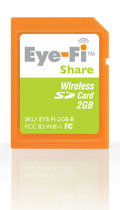
Home, the base model expected to retail for $79.99 USD, offers 2GB of storage and is specifically suited for uploading from the camera directly to the user's computer. Share is intended to be a companion for users who upload their content directly to the Web. It offers with it unlimited access to the WebShare service, which automatically sends photos to any of the 20 partnering sites, including: Facebook, Flickr, Picasa, Fotki, Photobucket, Shutterfly, Wal-Mart Digital Photo Center, and Windows Live. Eye-Fi Share will retail for $99.99 USD.

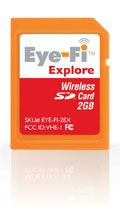
In addition to the 2GB of storage, upload to computer function, and unlimited WebShare, the Eye-Fi Explore model also offers 1 year of Hotspot access through a partnership with Wayport. But the principal feature of Eye-Fi's flagship model is its Geotagging functionality.

Similar to GPS simulation, the Eye-Fi Geotagging service determines where a photo was taken by the location of nearby Wi-Fi networks. This information is then coded into the photo's EXIF data, and automatically labels the location when uploaded. Eye-Fi Explore will cost $129.99 USD.

The company expects the new products to be available "in a few weeks."
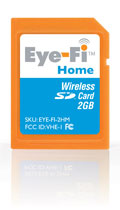
Eye-Fi HomeEye-Fi ExploreEye-Fi Share

Don't wait for Microsoft's patch: Secure Windows now from today's 0-day

Microsoft is recommending users simply get rid of a vulnerable ActiveX control that no one even uses any more. We'll show you how to do that right now.

Nokia: Android? Are you crazy?

Rumors about new Android devices abound, but Nokia squashes this one.

Symantec goes live with Norton 2010 betas

Norton Internet Security and Norton Antivirus 2010 are now available for testing.

What's Now: Drenched with 'Purple Ra1n,' iPhone users caught eating 'redsn0w'

Plus: Symantec and McAfee go to war, and what's LucasArts building in its top-secret, moon-shaped orbital facility?

In New York, online booze loses a Circuit Court decision

Court worried about gangster influence if liquor purchased directly.

British Telecom sacks bitterly unpopular Phorm ad platform

Phorm under BT is no more, but the targeted ad service could still go on under Virgin or TalkTalk.

CBS is the last man standing against Hulu

Popular streaming syndication site Hulu now has all the major networks in its camp except CBS.

Not just Vista: The operating system is dying, too

Carmi Levy: Wide Angle Zoom Vista's troubles point to a bigger shift that will affect more than just Microsoft.

Bolt: the dark horse mobile browser

Bitstream's small-footprint mobile browser is available in Beta 3

IE8 WSUS update push to begin August 25

After months of availability to users willing to seek it out, Internet Explorer 8 will be rolled into Windows Server...

Geeks vs. journalists: A tale of two worldviews

Recovery with Angela Gunn Why geeks think most mainstream journalism is flaky, and why the mainstream thinks geeks are trying to kill them. (They're both right.)

Can Linux do BitLocker better than Windows 7?

Betanews kicks off a new series with a look at how the Linux operating system's FDE stacks up against BitLocker, the Windows feature that today commands a $120 premium.

Windows 7 ISO Verifier 1.0

July 6 - 5:40 PM ET

ProgDVB 6.10.2

July 6 - 5:19 PM ET

FreeBSD 8.0 Beta 1

July 6 - 4:58 PM ET

K-Lite Codec Pack 64-bit 2.5.0

July 6 - 3:55 PM ET

SysCheckUp 1.4.0

July 6 - 3:34 PM ET