Yahoo's Fire Eagle has landed, offering open mobile services

In March, Yahoo opened the beta of Fire Eagle, its location-based middleware that allows developers to build services tailored to the user's geographic area. Fire Eagle is now open to the public with 22 launch partners providing their services.
Fire Eagle begins by asking users for location data, which can be entered as vaguely as the country or as specifically as the global coordinates. From that point, Fire Eagle's job is done as far as the user is concerned, most of a user's interaction will take place through applications built upon the service.
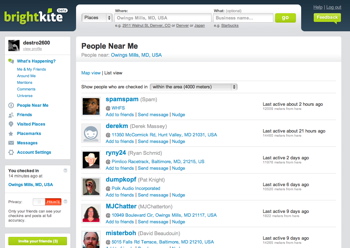
There are applications available now for a variety of devices and operating systems, though most are not cross-platform. The gallery currently includes location-based social networking apps from Brightkite, Plazes, Loki, and Zkout; travel mapping apps from Dopplr, Map My Tracks, eKit, and Navizon; point-of-interest and event listings from Lightpole, Outalot, and Wikinear; location-based search from Rummble; messaging from Spot and Pownce; and news (pertinent up to 1,000 feet) from Outside.in.
 There is also a Traffic tracking app for internet-connected personal navigation devices from Dash, Fire Eagle widgets for the OSX dashboard, a J2ME mobile location updater (for Nokia N95 w/GPS), iPhone geotagging from Metosphere, a Movable Type blog plug-in, and a Flickr geotagging mashup for Nokia and Motorola phones called Zonetag.
Developers wishing to capitalize on Yahoo's geo-aware infrastructure can freely access the Fire Eagle API through Yahoo's Developer Center. Applications fall into three general categories: Web, mobile, and desktop. Since each provides a different authentication type, developers have to have a general idea of what they're building before they can obtain an API key. Yahoo provides a few walkthroughs and examples for developers as well.