Another rocky quarter for AMD: More losses, executive shuffle

Posting a second quarter net loss of $1.19 billion, its seventh money losing quarter in a row, AMD's Hector Ruiz will hand the CEO position over to President and COO Dirk Meyer.
As BetaNews reported last April, AMD's return to dominance is predicated upon its image as a performance leader. Though the company says the transition had been in the works for two years, yesterday's announcement that Ruiz would be stepping down as CEO of AMD and into "Executive Chairman of the Board" position, may play into its efforts to renew its image.
As the first replacement to founder Jerry Saunders, Ruiz has stood at the helm of AMD through tumultuous times. A series of missteps, though, have left investors and analysts lukewarm on Ruiz as CEO. He presided over the Barcelona Opteron launch last year, which many considered a fiasco. Following unfulfilled commitments, Ruiz was quoted as saying, "Shame on us. We blew it, and we're very humbled by it, and we're going to learn from it, and we're not going to do that again."
Dirk Meyer is, according to The New York Times, "widely respected and admired...and has the confidence of Wall Street analysts." He is the former president and chief operating officer who led both the Athlon engineering project in the late '90s, and the Opteron project five years ago with considerable success. Though he's shared executive responsibilities with Ruiz, Meyer's reputation as a "hands on" leader is an asset that AMD could use.
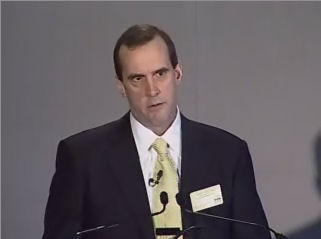 The Street quoted an unnamed AMD exec as calling the change in management "cosmetic surgery," where both Ruiz and Meyer will be essentially continuing their same jobs, just with different titles.
The company also announced on Thursday that it will be discontinuing its digital television and handheld businesses, fulfilling a statment from Ruiz earlier this year that the company would be exiting its non-core businesses. AMD's chief competitor Intel made a similar announcement on Monday, saying it had completed a reorganization of its Digital Home Group, its consumer electronics component division.
AMD's second quarter revenues were $1.349 billion, dropping 7% from the first quarter, and falling short of Wall Street's predicted $1.45 billion. The company posted an operating loss of $143 million even though its gross margin was 52% and expenses remained largely the same.
According to CFO Robert Rivet (our thanks to Seeking Alpha for the transcript), "We have made progress on the 'break-even point' as I talked about. Our goal is to get to the $1.5 billion in the beginning of next year. We are making progress to that. We'd like to split the stake in the ground that we don't want to look back so start making money in the third quarter and move forward from there...clearly we believe that new products will give us traction to increase the top line. Our strategy of continuing to execute on 45 nanometer improves our cost structure but also it does incorporate asset smart execution by Hector to bring it to conclusion."
Meyer said that production of 45 nm chips began last quarter and AMD is on track for shipments in Q4. Much of the current capital expense is putting that plan into effect. "Typically it takes us three to four quarters to flip the factories once we start so that would say it would be largely converted roughly in the middle of next year."
For those keeping track, this means AMD expects to ramp up its revenue at the beginning of the year, when its most promising products won't be shipping in volume until the middle of the year.
Rivet also acknowledged the pressure from NVidia on ATI, saying "Clearly our competitor took some pretty aggressive actions to try to maintain their position as we came out with our new products and slow things down. I also think it had a lot of inventory in a very seasonally weak quarter so there was more pricing pressure in the graphics space.
"Processors always have pricing pressure but I wouldn't say it was anything beyond normal," Rivet continued. "There is a tendency shift that we see going on. This push is more geared toward the value space that is kind of where the world wants to go, and you have to remember particularly for AMD, we are much more exposed to the consumer than the commercial space. We are trying to change that mix but that is the reality of the world we live in today is the consumer space."