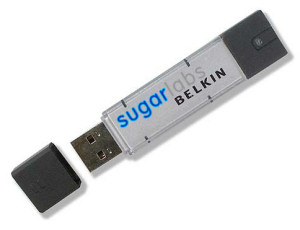
Beta of Live USB Sugar OS opens

By Tim Conneally | Published April 22, 2009, 10:05 AM

Sugar on a StickSugar Labs, makers of the icon-based GUI for the One Laptop Per Child XO-1 announced today the first beta of Sugar on a Stick, a live version of the operating system that can be booted from a USB stick as small as 1GB in size.

While One Laptop Per Child continues forth despite the crushing blows dealt by the economy, Sugar Labs has found that a Live distro of its linguistically-unencumbered interface will help it grow outside of the confines of the "$100 laptop". Based on Fedora LiveUSB, Sugar on a Stick boots to the Linux distribution, and stores all usage data on the USB device without any alteration to the host system.

All are invited to test the project, as the finished product is intended to run on as many modern and legacy hardware configurations as possible.

It will definitely be worthwhile to simply experience Sugar on a system that is not resource-constrained. Betanews will be playing with Sugar on a Stick later today and will post an update.

Comments

View comments by with a score of at least

Not working on a Dell Latitude D630. Could be my cheap-o flash drive though.

*shrug*

*laughing*

Ok, apparently someone here has nothing better to do than mod me down... That's just so incredibly sad. What, it not working on a D630 pisses you off?

Score: -2

|

There you go, you're back to being a zero :)

Obviously it was just a case of 'shoot the messenger'.

Score: 1

|
Below viewing threshold. Show

Was going to try it last night on my desktop, but... WoW was calling ;)

Ah well, maybe tonight.

*It would appear fatty has made his rounds on his numerous accounts to spam-mod. He loves me so...

Score: -4

|

I'm trying to get it running on a ten year old IBM Thinkpad just for laughs....but nobody's laughing yet.

Score: 0

|

Still didn't get it on my desktop at home... to busy lately.

Perhaps this weekend, if I remember.

Let me know how it goes on that thinkpad (opr doesn't go, as the case will likely be).

Still, it's a beta; I am sure they will improve support for a wider range of devices in the future builds.

Score: 0

|

Google Chrome 4: Yes, it's fast, but is it usable?

As Betanews readers have responded to our stories about Chrome's JavaScript superiority...Does that mean we'd actually use this browser? Well...

Video: Netflix on PlayStation 3

Netflix has come to the PlayStation 3 via Blu-ray and BD-Live.

Verizon Wireless launches new Android, Chocolate, and ruggedized phones

The lower-priced Eris joins the Droid, while the Chocolate gets a touchscreen and more music playback.

Early sales figures for Windows 7 nicely high, but do we know why?

Fans of triple-digit surges in figures quoted by Betanews will love this one, as it appears Microsoft rediscovered how to pull off a software launch.

Myka announces its latest Linux-based 'net top box'

Myka's ION brings Boxee, XMBC, and much more to HDTVs.

What hath Mac wrought? A remembrance after a quarter-century

The reason there's a Macintosh today is not because of some brilliant flash of engineering genius, but because Apple had the audacity to learn from its mistakes.

Early build of Moblin 2.1 improves connectivity, but not device support

The Linux Foundation's Atom-centric OS yesterday received a major overhaul with the project release of Moblin 2.1 for netbooks and nettops.

The iPhone's China syndrome: Sales of 5,000 and climbing

There's actually a country where Apple's device is not a godsend, where sales can be measured in the dozens.

New European counterpart to FCC will ensure 'a more neutral net'

Late Thursday night, the ruling telecom administrators of the EU's member nations signed away their final authority to a new entity overseen by the EC.

Sophos study suggests Windows 7 UAC's default setting is self-defeating

Without any anti-virus installed, a Sophos test showed, User Account Control was only capable of thwarting just one malware package out of ten samples chosen.

Indiscreet tweet trips awareness of Web SSL vulnerability

A group of high-level security engineers had been making progress on thwarting a low-level threat to the Web, until somebody blurted it all out on Twitter.