Can mobile phones finally replace point-and-shoot cameras?
By Tim Conneally | Published February 16, 2009, 3:40 PM
Today is without a doubt the day of highest pixel density in mobile phone history. Top three handset manufacturers Nokia, Samsung, and Sony Ericsson all unveiled additions to their 2009 cellular phone lines that are heavily stacked in the imaging department.
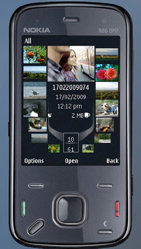
Nokia announced its N86 touchscreen dual-slider, the company's latest addition to its premium N Series. The HSDPA device runs Symbian S60 3rd edition (feature pack 2), and features a 2.6-inch OLED display. The N86's big gun is its 8-megapixel (3280 x 2464) camera, which comes with dual LED flash, Carl Zeiss Tessar optics, and a 1/1000 second mechanical shutter, a feature not commonly found in phones.
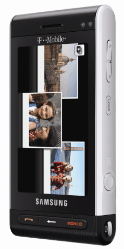
Samsung also dished out an 8-megapixel camera phone with its Memoir, which will be available on February 25 for $249.99 with a two-year T-Mobile contract. The Memoir is equipped with a Xenon flash, CMOS auto focus, and 16x digital zoom, all relatively standard features on camera phones. It ups the offering slightly by putting in automatic smile detection, and geotagging capabilities.
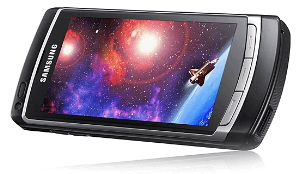
Samsung's Omnia HD, which also premiered today, boasts the ability to capture 720p HD video. Though the device isn't equipped with a high definiton screen for native HD playback, the S60-based Omnia HD can export video to other devices via DLNA connectivity.
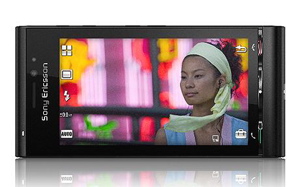
The stat flexing show was stolen, however, by Sony Ericsson's Idou, a Symbian Foundation device which includes a staggering 12.1-megapixel camera built in. Though Sony Ericsson has said that "Idou" is only a concept name, the device is expected to be released some time before this summer. The Idou's 3.5-inch 16:9 touch display is used to choose where the focus of the photo will be before snapping a shot, and is then used to manipulate images after they have been captured.
All of these handsets support between 8GB and 16GB of MicroSD storage and feature at least one wireless method of exchanging photographs, certainly providing adequate space for improving the capture of candid, drunken, gang sign flashing moments. However, we have yet to see a camera phone with a solid optical zoom lens, or light compensation modes that would actually make a camera phone a viable replacement to a point and shoot in important situations.
Steadying? Focus? Light adjustment?
Most of the cell-camera's I've seen on phones under $200 (the magic price point) don't have half (or any) of these features.
Until then, the answer is a resounding "No."
They're great for candid shots, the, "Oh hey, you gotta see this!" crap, and for posting to blgos and such, but for trips, events, or special occasions? Not even close.
Score: 1
|Point and shoot cameras will not be replaced by a phone that costs 3-4 times as much as a camera.
Sure its nice to have a phone that has some sort of camera functionality, but a lot of the after use, such as transfer of image, recharging/replacing battery is a major pain when compared to a standard camera.
At least they've got a large screens so you can view the huge pictures in some kind of quality before they're deleted from the phone a few days later.
Score: 1
|I am waiting for a smartphone with a decent camera. We do not need megapixels, but decent 28mm wide lens and 3x optical zoom would be nice. I am sure all of this is possible - but not sure why phone manufacturers are so stupid not to make it happen. Maybe we need Canon to start making phones. Though Sony makes both decent ultra-compact cameras and decent phones - but I guess they are too corporate to join those 2 products into 1 sucessful compact camera-phone.
Score: 0
|It's a size problem. People want phones that are small, lightweight, slim, and all at a reasonable price. The physical constraints are what prevents a cell phone from giving you these features. Oh sure they can build such a device, but it's going to be a beast to carry and it may not sell well.
This is the same reason point & shoot cameras are never going to be as nice as an SLR camera. I have a nice SLR but I generally don't have it with me because it's bulky and heavy. I also have a nice HDV camcorder but I generally don't have it with me because of the size constraints. I end up using my point & shoot to do inferior quality photos and videos because that's the device I have with me at the moment. While the quality is inferior, it's better than not having the images and photos.
Score: 0
|I definitely could see a 28mm (35 mm equivalent) wide lens and a 3x optical zoom on some of these smartphones but I can't see any camera phone being a good replacement for a point and shoot camera anytime soon. 3x optical would be a nice improvement but that still worse than most point and shoots. Only the cheap or very slim cameras have such a modest optical zoom.
There are definitely a lot of other issues precluding a camera phone being a good replacement for a point. Low light performance leaves a lot to be desired for many of the slimmer cameras.
The point and shoot cameras that I know of that do give a wide enough range of optical zoom(a decent wide angle and a zoom that is long enough for most everyday usage) and decent image quality for the higher ISO settings for low light situations are far thicker than most smartphones and cost almost as much as well.
I am skeptical that you could find any camera that would be adequate for anything but the most basic tasks that wouldn't add at least a $100-200 to the price of the phone.
Score: 1
|I think if they were to make phones the size of today's cameras (ie-the elph lineage) and crammed it all in there, touted it as being A CAMERA phone, they'd have a nice product.
The problem, at least right now, is that the phone processors and capacities are changing so frequently right now w/ the advent and furthering of miniaturization that in 2 years your "phone" is destined to be crap in comparison to anything else.
I personally am a year into my 2 year contract and I am TOTALLY jones'ing for a new phone, but alas I must wait. *frowns and taps feet impatiently*
Score: 0
|