Dell: Most Linux users don't really need the latest version
By Jacqueline Emigh | Published May 20, 2009, 3:24 PM
The new Mini 10v netbook that Dell launched last week will get more capabilities over the year ahead, including what the company is calling "wireless improvements." However, although "Linux enthusiasts" might wish otherwise, an upgrade from the currently supported Ubuntu Linux 8.04 to the newer 8.10 or 9.04 won't be happening yet. A later release of Ubuntu isn't in the best interests of "mainstream users," according to an e-mail from Dell to Betanews last night.
The official word from Dell is that there are two main reasons for sticking with Canonical's Ubuntu 8.04 -- for the time being, anyway -- in the Linux editions of its Inspiron netbooks, a line-up also available with Microsoft's Windows XP.
As Betanews reported last week, one of Dell's other Inspiron netbooks -- the Mini 10 (without the "v") -- is now being groomed to act as a subsidized mass market offering from an as yet unnamed wireless carrier.
"We are trying to stay on a 12-month cadence to keep costs down, and build a stable platform," a Dell spokesperson said in an e-mail to Betanews late last night. "A mainstream user does not care if it's [Ubuntu Linux] 8.04 or 8.10 or 9.04 (he/she does not know what those are) -- she just wants it to work right and be stable/safe...Most of the Linux enthusiasts would not like to be so far behind (i.e., 8.04 vs. 9.04), but they are not our primary target audience for the [operating system] image."
Also, Dell doesn't seem about ready to stray away from Ubuntu as its Linux platform for netbooks or any other consumer products.
"We have offered Ubuntu pre-installed on our consumer systems for two years now, based on customer feedback on Ideastorm. Canonical has been enthusiastic about working with us to deliver a rock-solid Linux experience for the general non-technical community, and we look forward to continuing this dedicated team effort going forward," Betanews was told.
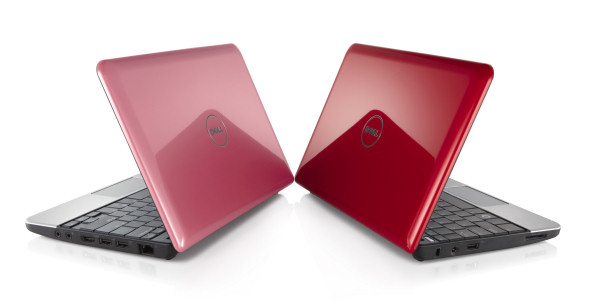
Meanwhile, Dell has already added a network manager feature to the Mini 10 and 10v which is aimed at bringing the sort of 3G wireless connectivity that's built into Ubuntu 8.10. "That should support whatever 3G cards are now supported in stock Ubuntu," according to the e-mail.
"In addition to 8.04, we chose to control our updates (via our own update repository -- similar to MS update). We go the extra mile in double qualifying all updates (that one would see in stock 8.10 and 9.04) and only publish those that are rock-stable. We will [put in] select features over the course of the year that make sense for the product, like wireless improvements," according to Dell spokespersons.
Yet seemingly, the availability of Dell netbooks still varies considerably from one country to another, as does the availability of various operating systems aboard the systems. A check by Betanews of Dell's country-specific sites this morning turned up the fact that some sites -- for the UK and Australia, for example -- have also been marketing another netbook, the Atom-based Latitude 2100, with a choice of Ubuntu 8.10, Vista, or an XP downgrade. The "smart rubberized 10.1-inch netbook" is a tad weighiter than the Mini 10 -- 2.91 lbs. rather than 2.86 lbs. -- and also a little pricier. You can also buy a Mini 10 or Mini 9 from the UK site, but at this point, only with Windows XP.
In Spain, on the other hand, the advertised Dell netbook choices are limited to the Mini 9, also with XP; and in Venezuela, to the Mini 10 with XP.
In the US as in the UK, though, Dell is launching the new Mini 10v on Ubuntu 8.04 and Windows XP simultaneously, according to the officials, who didn't delve into specific plans for the Mini 10v in other countries. Dell also plans Ubuntu 8.04 availability on the Mini 10 soon for the UK, and the Ubuntu option is already in full swing in the US, Betanews was told. "Our goal is to provide choice and while we may not have been able to launch Windows and Ubuntu simultaneously on all of our mini platforms, we have offered [it] when it was ready," according to the company. "It's very important for us to make the Linux experience as simple and seamless as possible for mainstream users vs. 'Linux enthusiasts.'"

Does anybody know if the installed Linux supports the multitactile-touchpad capability?
Score: 0
|This is really great for the public. This is what linux needs, to be marketed by a large OEM and their decision to stick with 8.04 is a really wise one. We enthusiasts might forget that the average user will leave linux the moment something breaks (because linux is still viewed with caution) instead of giving the same chance as windows that it can be fixed. So the average user needs a rock solid linux so that they can get used to it and then look for new features. After all for us enthusiasts, we simply need hardware and from there things are customized the way we want them.
Score: 0
|I think its a smart choice to stick with 8.04, especially with the craziness that is going on in the video driver area at the moment.
And to his point, the people who are concerned about the version of ubuntu are the same ones (me included) who fdisk and repartition the hdd as soon as they get a new machine, and install Linux, windows, or both, exactly the way they want it. The enthusiast is in no way harmed, while the cud chewing mass market gets a nice safe STABLE O.S.
Score: 0
|8.04 is LTS people. Why would Dell choose a non-LTS release ? I'm running Jaunty on my work desktop and it's got its share of issues. Instead of whining, we should be applauding Dell's move to put Linux in front of ordinary users.
Score: 1
|^this^
People below don't seem to realise what LTS means though.
Score: 0
|Seeing a pc company even give this much thought and effort into offering a linux distro is just amazing. Even if some might disagree with it's decision to delay updating to a recent version of Ubuntu, their interest and work in linux should be applauded.
Score: 0
|It will do Microsoft the world of good though, especially when people start to compare....old Ubuntu or New Windows 7 ???
Score: 0
|Sorry, but Dell's failure to stay on the release version of Ubuntu costs them my business.
Score: 0
|You "experts" whining about Dell using 8.04 are ridiculous. If you had any familiarity with the Ubuntu development cycle, you would not think as you do. The LTS version is not NEARLY as thoroughly vetted as say, Debian Stable. The non-LTS releases are even less thoroughly vetted.
LTS, or nothing, for me.
Score: 0
|whoops double-posted
Score: 0
|You do understand that there is a difference between the general release and the LTS releases? Right? 8.04 is fully supported by Ubuntu until 2011 while 9.04 (the latest version) is only supported til 2010. I would assume that some time after 9.10 LTS is released (and hopefully with thorough testing) they will move to that OS.
It's a darn smart move that Dell is sticking with a stable, long term supported release than trying to go with the latest one out there, which may still be buggy.
Linux is still on fairly shaky ground in regards to the general consumer. It's better to go with an OS and version thats already been put through the ringer :)
Score: 0
|he is right.
most wouldn' care about the version, but i would.
Score: 0
|Kudos to Dell for looking out for the average Joe and Linux. Stay with something that is proven and still being updated.... linux enthusiasts are more than free to upgrade on their own. It's about time a computer company took Linux seriously and using a year old distro that's still being updated is nothing wrong. Look at all the laptops with XP still..... 8 years old now, but people want it because it works well!
Score: 1
|I think this is great, I really think that Ubuntu and Dell should work on a plan to go from LTS to LTS and Ubuntu needs to have a more clear LTS release schedule and push LTS as the stable version for OEM's
Maybe on a 18 month to 2 year schedule like Apple. Still keeping with the 6 month cycle for us power users who like the new features fast.
In the end Ubuntu wants to be the defacto option in the 3 way between Linux, Windows and MacOS.
Maybe they can get to the point where the 3 way will be (To the general public) Ubuntu, Windows and MacOS.
All they have to do is make it easy to go from LTS to LTS and maybe have a pop up go to users letting them know when the next LTS is out so they can update.
Score: 0
|

