Former Netscape attorney may be named DOJ antitrust chief

A name floated this morning by The Wall Street Journal as a likely choice by President Obama to head the Justice Dept.'s antitrust division, may not exactly be the choice Microsoft would have preferred.
Christine Varney, a former Federal Trade Commission member in the Clinton administration, and an attorney in the high-visibility firm of Hogan & Hartson in Washington, DC since then, appears to be the leading candidate for appointment to a deputy attorney-general's post in the Justice Dept.'s Antitrust Division, according to a WSJ report this morning. During the US Microsoft antitrust trial, but following her tenure with the FTC, Varney was an outspoken critic of Microsoft, especially since she was on the team representing Netscape, the company that was most wronged by Microsoft's actions at that time.
In recent years, Varney has been an ardent supporter for online privacy legislation backed by government enforcement, as a supplement to market-driven self-regulation. As a lobbyist for the now largely defunct Online Privacy Alliance, she argued on behalf of service providers' ability to set industry policies regarding the collection of information online, followed by the government's ability to enforce regulations against those who fail to live up to those policies. Varney called those two groups the "good actors" and the "bad actors," respectively.
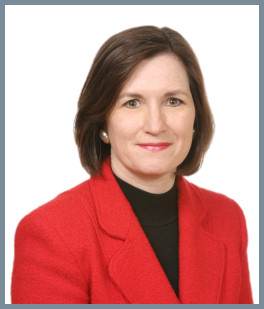 "A bad actor who is engaged in the collection of information from individuals through deceit, through fraud, through any kinds of devious means and the use of it in deceptive ways, is currently subject to prosecution by the FTC, the 50 states' attorneys general and, depending on the circumstances, the Department of Justice," Varney told a press gathering in July 1998. "And we really support vigorous enforcement of the existing law. The Alliance document on self-enforcement then looks to, how do we create an atmosphere of trust on the Internet? And what we're talking about is for the good actors. For the companies that want to do right on the Internet, that want to gain consumer trust and confidence, that want to grow the net, how can they do that? And we think they can do that through practicing good privacy policies and certifying they do through this kind of a seal program or idea."
Such a "seal program" would have established an industry-wide merit system for "good actors" whose privacy policies live up to, or exceed, the industry's own code of behavior.
Varney was also a supporter of the Child Online Protection Act, which only yesterday was dealt a final death blow by the US Supreme Court. The Act -- which her boss, Pres. Clinton, signed into law after having taken her advice -- would have enabled the punishment of individuals and institutions who failed to provide adequate filtration on their Internet systems for pornography being displayed to minors.
In a 2000 appearance on PBS' The NewsHour with Jim Lehrer, Varney defended the Act -- which was law at the time -- though she lumped it in with other regulations designed to protect consumer privacy online. When asked by Ray Suarez how she would prefer the government pursue groups or individuals that fail to observe privacy regulations, her defense used strikingly similar language: "As a former government enforcer, I've always thought...good laws don't stop bad people from doing bad things. They merely give prosecutors and in some cases private citizens, more tools to go after them. So I think we have to remember that we have a lot of law in place right now. The question is whether or not existing law is adequate. As we discussed earlier, the FTC has the authority right now to prosecute bad actors under certain circumstances. I'm not sure that an additional grant of regulatory authority is going to get us all the way there in the least intrusive manner."
Varney's personal "About" page on her law firm's Web site lists her as having represented the following stellar list of companies: "eBay, Fox Interactive Media/MySpace, Orbitz Worldwide, Inc., DoubleClick, Ernst & Young, EMI, Intelius, Advertising.com, American Hospital Association, Washingtonpost.Newsweek Interactive, Dow Jones & Company, AOL, Synopsys, Compaq Computer, Gateway, Netscape, The Liberty Alliance, and Real Networks."
Prominently not appearing in that list are Google -- the subject of intense scrutiny recently over privacy regulations, as well as its previous effort to help Yahoo not be swallowed by Microsoft -- and, of course, Microsoft.
Being no stranger to PBS, Varney -- at the time, publicly representing Netscape -- appeared on the NewsHour in February 1999 on the day that then-Microsoft vice president Cameron Myrhvold testified that his company had placed restrictions on major Internet service providers, providing prominent placement on the Windows desktop in exchange for limiting the Web browsers they offer to just Internet Explorer; and that Microsoft "embedded" IE with Windows with the same general aims in mind. Her counterpart on the panel that day, Microsoft consultant Rick Rule, had just stated that the government had failed to demonstrate that the company's conduct had directly harmed consumers.
When asked whether Rule was right about that, Varney responded, "Saying that Microsoft had a good week is like saying Microsoft's not a monopolist.
"I think the Government proved every single claim that they had to," she continued. "The Government had to prove Microsoft was a monopolist. Microsoft's own witnesses acknowledge that there's no viable alternative to Microsoft's operating system...The Government had to prove that Microsoft engaged in certain acts and practices. Clearly, the Government proved that; Microsoft's own witnesses conceded several of those. Cameron Myhrvold got on the stand and said the reason they had to put the browser in the operating system was because if consumers could freely and easily choose between two browsers, Microsoft would lose...And finally the Government had to prove these acts were illegal. I think it's absolutely clear that Microsoft's acts were intended to and did, in fact, restrain trade."
Christine Varney's ability and willingness to make sweeping choices with potentially serious repercussions was proven in May 1997, when she cast the deciding vote on the FTC against tobacco products maker R. J. Reynolds' use of the "Joe Camel" character in its cigarette advertising. Only three months later, prior to the actual expiration of her term, she left the FTC to be the driving force in Hogan & Hartson's Internet law division. Though she's officially been there all this time, she has already served as a senior counsel to the Obama transition team, and may have been the person who vetted -- assuming such vetting took place -- then-Sen. Hillary Clinton, prior to her nomination for Secretary of State, though Varney did work closely with the Secretary's husband.
Just yesterday, the Antitrust Division released its latest Joint Status Report with Microsoft, on the ongoing status of the company's documentation efforts. There were no major hitches to report. However, this was the last such report produced under the leadership of the previous administration.