
No more 'draft:' 802.11n Wi-Fi certification program finally begins

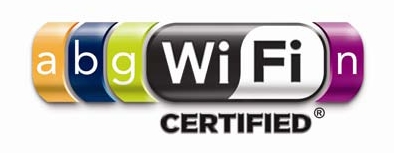 Well over seven years since work began on the standard, and four years since the first draft of the proposed standard was published to vendors -- and subsequently rejected by them -- there is at last a process in place for wireless networking equipment vendors to get their products formally certified using a certification that means the product is certified. If that last sentence sounded redundant, believe it or not, it wasn't: Since 2007, some Wi-Fi products have been certified using a certification that did not mean the product was certified.
Huh? Some products that adhered to so-called "draft-11n" standards (in this case, "Draft 2.0") were allowed to carry a logo that said "Wi-Fi Certified 802.11n Draft 2.0," with the latter two terms in smaller print. At the time, the Wi-Fi Alliance described this certification as "the consumer's indication that a product has passed rigorous testing and can deliver the very best user experience." More than 700 Wi-Fi products received the right to bear this logo. But among professional network engineers, there was no doubt that this "mark of excellence" was perhaps the world's most definitive maybe.
Now that the standard itself is almost certainly official (the formal ratification comes next month), the Wi-Fi Alliance is replacing the old "draft" logo with a new one that it hopes will represent the world's most absolutely certain maybe.
To distinguish itself from the old logo -- literally, to "prevent" confusion -- the Alliance is employing something it's calling the "Matrix," which is full of multi-colored letters representing not only 11n but all the standards leading up to it. If you see the matrix on a product, you'll know it has passed the Alliance's current test battery for certification.
But what does that test mean, especially now? The whole point of 802.11n was to open up 40 MHz of bandwidth in the 2.4 GHz frequency band for use by more multiplexed signals, giving it the amount of space that wasn't available for 11g. But as SmallNetBuilder's Tim Higgins discovered at the time, wireless routers that received the "Draft 2.0" semi-certification logo could default to using two of the allotted three channels in this band at the same time, making it impossible not to interfere with 11g-certified equipment operating in the same vicinity.
The Alliance actually never solved this problem, as one of its marketing directors told Wi-Fi Networking News' Glenn Fleishman last August. Although manufacturers may go ahead and use this wide-band approach as proposed for Draft 2.0, the marketing official said it's now officially "discouraging" this practice; and Fleishman points out, Apple is heeding that warning. For those who aren't paying attention to the warning, however, there will be a "rigorous" testing process.
But an engineers' white paper (PDF available here) updated yesterday by the Alliance shows no sign of any such discouragement. "While 802.11 a/b/g networks operate in a 20 MHz channel, 802.11n defines the use of 20 and 40 MHz channels. 40 MHz channels allow doubling of the data rate to 150 Mbps," the paper reads. "All 802.11 devices send a packet over the air as a sequence of symbols. Devices using 40 MHz channels can encode and transmit more data in each symbol. Depending on the degree of complexity that the environment can support, 802.11 devices choose an appropriate data rate for use over the air."
Later, the paper points out that devices bearing the new logo can create wide channels (40 MHz) for themselves in either or both the 2.4 GHz and 5 GHz bands. If a device uses the 2.4 GHz band ("draft 11n"), it must also pass the test for 11g -- the class of device with which an 11n device may interfere. If it uses 5 GHz, the device must also pass the test for 11a -- the class with which it may interfere there. However, 11n devices will be tested to ensure that they can detect possible interference with other signals as much as possible, and take corrective measures where it can.
Since interference may always be a problem, the new 11n standard (the one with the matrix logo) will utilize a multiple-antenna encoding technique called space/time block coding (STBC). It's such a clever technique that, conceivably, a manufacturer may be able to use two old "draft 11n" chips in tandem, to create the multiplexed antenna for a new class of 11n devices. (That's one way to get rid of those old chips.)
As the white paper explains, "STBC improves reception by coding the data stream in blocks which are distributed for transmission across multiple transmitting antennas and across time. At the receiving antenna, the data is recombined in an optimal way making use of the coding. STBC requires multiple transmit antennas and delivers benefits to devices with the ability to receive one or more data streams."
An 11n device does not have to have the capability to use the 5 GHz band, or use STBC, in order to obtain the logo. It should have either or both capabilities to avoid interference. But this way -- as the Alliance promised its members -- devices that had received the previous edition of the certification logo will be able to receive the new matrix logo.
But how, then, will consumers know the difference between an old 11n device and a new one that overcomes the problems of the old one? With an addition to the logo, of course: The Alliance is adding two classes of small print taglines for possible inclusion below the multi-colored letter boxes: one that reads "dual-stream n" if it supports 5 GHz, and another that reads "multi-stream n" if it both supports 5 GHz and STBC.
The Alliance is advising manufacturers to provide a complete set of features alongside the matrix plus taglines, so that consumers are fully aware of what those taglines mean. But they're encouraged not to rely on the feature set chart alone: "While the interoperability certificate provides a detailed look at the features tested for a certified product, the logo and tagline graphics are meant to distinguish products with a richer feature in a retail environment."
With that, the Alliance has created a fifth permutation of 11n devices since 2006: first the "pre-11n" class (actually created by default, by manufacturers that disapproved of the Alliance's tactics), then the "draft-11n" class, followed by the "Draft 11n" class (capital "D," also known as "Draft 11n 2.0"), then the Matrix, and now the Matrix with taglines. These additional branding elements, the Alliance says, will "help consumer users differentiate products and understand their capabilities."



