Samsung Mondi, first WiMAX MID in US...maybe?

By Tim Conneally | Published March 27, 2009, 9:10 PM

This week, Samsung confirmed to Phone Scoop that the SWD-M100 Mondi device demoed at Mobile World Congress '09 is coming to the Clear WiMAX network in the US.

The tablet runs Windows Mobile 6.1, so the 4.3" touchscreen is therefore resistive (i.e., it requires a stylus). It slides up to reveal a QWERTY keypad and 8-direction control pad, there is a 3 megapixel autofocus camera facing outward and a VGA webcam facing the user. It has a microSD slot for memory expansion, but there is not yet a spec telling what kind of onboard memory and processing power it will provide.
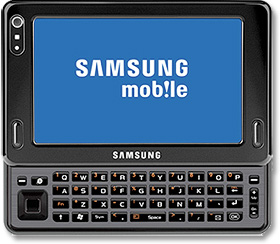
Samsung Mondi

The device looks very similar to the Nokia N810 WiMAX Edition mobile Internet device (MID), which was scheduled to come to Sprint's XOHM WiMAX network in the US, but was reportedly discontinued at the beginning of 2009.

Several years ago, Nokia was one of the strongest supporters of WiMAX in the US. But by January 2009, the 4G standard had still only been deployed in two U.S. cities (compared to the 453 deployments that have begun in 134 other countries). Even now, deployments aren't expected to break the twenty biggest U.S. markets until next year. Any technology Nokia conceived in 2005 as cutting edge U.S-exclusive 4G hardware would practically be dead on arrival by 2010.

iSuppli reported today that Nokia has pulled back from outsourcing device production to Electronics Manufacturing Service (EMS) providers and Original Design Manufacturers (ODMs) as a result of weak global demand for those devices.

So if the Mondi is going to replace the N810 WiMAX Edition and attempt to be marginally closer to the cutting edge, or at least offer a product that will be in demand, it's certainly going to have trouble doing it with Windows Mobile 6.1.

View comments by with a score of at least

Google Chrome 4: Yes, it's fast, but is it usable?

As Betanews readers have responded to our stories about Chrome's JavaScript superiority...Does that mean we'd actually use this browser? Well...

Video: Netflix on PlayStation 3

Netflix has come to the PlayStation 3 via Blu-ray and BD-Live.

Verizon Wireless launches new Android, Chocolate, and ruggedized phones

The lower-priced Eris joins the Droid, while the Chocolate gets a touchscreen and more music playback.

Early sales figures for Windows 7 nicely high, but do we know why?

Fans of triple-digit surges in figures quoted by Betanews will love this one, as it appears Microsoft rediscovered how to pull off a software launch.

Myka announces its latest Linux-based 'net top box'

Myka's ION brings Boxee, XMBC, and much more to HDTVs.

What hath Mac wrought? A remembrance after a quarter-century

The reason there's a Macintosh today is not because of some brilliant flash of engineering genius, but because Apple had the audacity to learn from its mistakes.

Early build of Moblin 2.1 improves connectivity, but not device support

The Linux Foundation's Atom-centric OS yesterday received a major overhaul with the project release of Moblin 2.1 for netbooks and nettops.

The iPhone's China syndrome: Sales of 5,000 and climbing

There's actually a country where Apple's device is not a godsend, where sales can be measured in the dozens.

New European counterpart to FCC will ensure 'a more neutral net'

Late Thursday night, the ruling telecom administrators of the EU's member nations signed away their final authority to a new entity overseen by the EC.

Sophos study suggests Windows 7 UAC's default setting is self-defeating

Without any anti-virus installed, a Sophos test showed, User Account Control was only capable of thwarting just one malware package out of ten samples chosen.

Indiscreet tweet trips awareness of Web SSL vulnerability

A group of high-level security engineers had been making progress on thwarting a low-level threat to the Web, until somebody blurted it all out on Twitter.