


A window closes on Microsoft
The sound you heard after HP's purchase of Palm last week was that of Windows reaching the top of the roller coaster and beginning its inevitable trip back down. Microsoft had absolutely nothing to do with the transaction, of course, but the ripple effects of the buyout foreshadow a significant shift of one of Microsoft's most stalwart partners away from its core products.
Worse for Microsoft, the HP/Palm deal shines a bright light on the software giant's seeming inability to set a course for a post-Windows world. Giants can and do get left behind if they fail to move quickly enough.
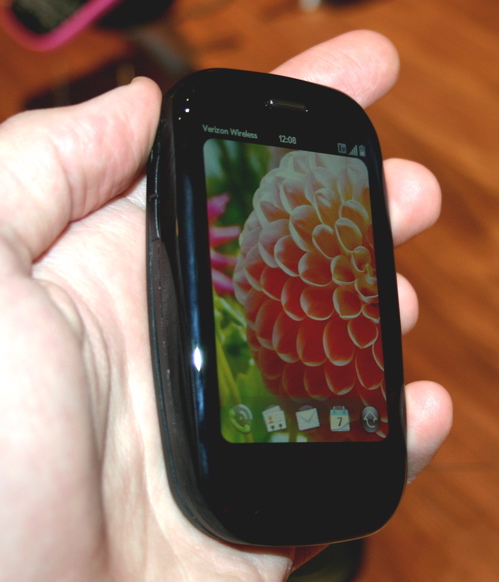
Actual Analysis: HP buys Palm, and the earth does move
HP's just-announced $1.2 billion offer to buy Palm is as close as this industry gets to a lifejacket. Despite the fact that the deal won't suddenly vault Palm back to the top of the mobile market it practically created, HP's ultimate goals for its latest acquisition extend well beyond the near-term.
It's been clear for years that Palm simply couldn't make a go of it on its own -- that if the company hoped to remain relevant in today's fast-evolving mobile marketplace, it needed to be acquired. The announcement earlier this spring that Palm was seeking a buyer and speaking with interested parties confirmed that it was only a matter of time before a deal was struck.
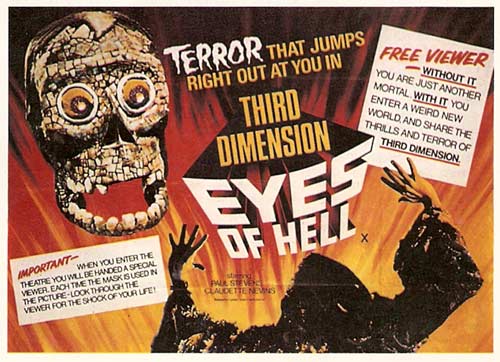
Warning! 3D TV can kill you
If you're like me, and you're among the dozen or so who still watch the nightly half-hour of American commercial broadcast TV news, you've probably noticed that about a quarter of that time is devoted to ads. Two-thirds of those ads are devoted to drugs, and half of those drug ads are devoted to warnings about the many gruesome, horrid ways in which you might unexpectedly die. The unspoken reason why these ads appear there in the first place is because advertisers reason that if you're still watching the Evening News, you must be afraid to touch your computer or your smartphone to read the real news from TMZ, which makes you (wait for it...) old. (Meaning, above 29.)
Samsung's Australian unit doesn't want the drug companies to have all the fun. Barely a month after releasing its 3D television offerings on an unsuspecting world, the company has published a warning on its Web site down under that outlines a list of risks so serious that those network news drug spots seem tame by comparison.

Twelve billion iBalls fall into Gizmodo's lap
What's a mobile device prototype worth?
Depends on who you are. If you're Apple, it's priceless. When you tightly control every aspect of the product development process, anything that subverts the message is a potential risk to the brand. Loss of control to a company like Apple is unthinkable. If you're Gizmodo, the answer is $5,000 -- which is the amount the tech blog reportedly paid to an unnamed individual who supposedly found the prototype of Apple's upcoming fourth-generation iPhone in a California bar.

The iPad delay is a crock
Sorry, Apple, but your decision to delay introducing iPads internationally doesn't wash. Your excuse -- that US demand was unexpectedly high and, as a result, you had to prioritize customers stateside until production could catch up -- is about as shallow and transparent as a Petri Dish full of Joost's good ideas.
I don't believe Apple's flimsy excuse and I don't believe anyone else should, either. If you think that Apple, master of the consumer electronics zeitgeist, was unable to accurately predict epic interest in a tablet whose existence was first speculated upon prior to the Battle of Hastings, I've got a bridge to sell you. (It's in Saskatoon, but it's a nice one.) And if you think Apple was somehow precluded from filling its global supply chain with as many iPads as its magic wand could conjure, I suggest you chuck the Kool-Aid and find yourself a tall glass of juice. Prune juice, maybe.
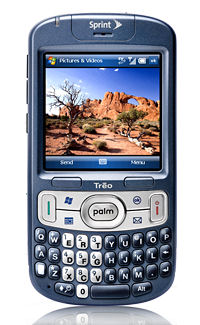
Psst...Wanna buy a used Palm?
As rumors swirl around the latest chapter in Palm Inc.'s checkered journey from mobile darling to also-ran, I'll resist the urge to place bets on which company or companies will be making an acquisition play. It almost doesn't matter who buys Palm at this point. What matters is what that buyer does with Palm afterward, and how any acquisition would affect that company's existing mobile strategy.
For quite some time, it's been obvious to everyone but Palm that it would eventually need a white knight. Palm seems to have finally clued in, as Bloomberg is now reporting that the mobile device vendor has engaged Goldman Sachs and Qatalyst Partners to find a buyer.
The true cost of iAd
Despite all the buzz this week that the upcoming major update to the iPhone/iPod touch/iPad operating system was all about multitasking and APIs, the real story was iAd. Although multitasking-deprived Apple fans haven't been holding their breath for almost three years waiting for an advertising framework, the new mobile ad network is infinitely more significant to the future of the platform than the ability to run more than one app at a time.
In many respects, iAd is nothing short of a full frontal assault on Google. While Google's model for generating ad revenue from activity-linked behaviors has rewritten the rules of advertising over much of the past decade, the path for the mobile market has not been as linear. Desktops and laptops have more than enough bandwidth and screen real estate to easily accommodate subtle text-based ads (or not-so-subtle dancing-cow banners) without significantly disrupting the end user experience. Indeed, many users can become so engaged in a given service -- search, mail, productivity, mapping, whatever -- that they virtually ignore the presence of ad-containing boxes toward the edge of the screen. Even if they're aware of them, the delivery paradigm on a traditional desktop, evolved in recent years to a ruthless level of efficiency, is largely responsible for Google's meteoric corporate rise.

A bill too far: With iPad, AT&T attempts a triple-dip
Do you ever get the impression your wallet is being relentlessly sucked dry? Or that consumers are being expected to pay for an ever growing list of subscription-based services that, in a less profit-mad world, would likely be free?
Apple's gotten quite enough publicity from me and my colleagues over the last little while. So while I hate to harp on the iPad yet again this week, I can't let go of the fact that this particular introduction represents yet another step toward the deepening fiscal enslavement of consumers.
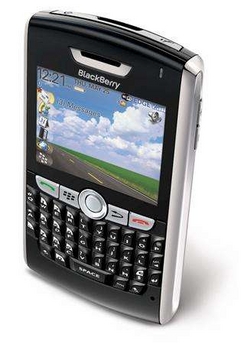
RIM approaches the edge: BlackBerry needs a reboot, fast
Is the BlackBerry beginning to go bad?
It's becoming increasingly difficult to ignore the rising volume of speculation that the smartphone that started the smartphone revolution may be moving into a bit of a middle-aged funk. The share price of BlackBerry maker Research In Motion took a hit Thursday after the company reported lower-than-expected earnings for the last quarter. Although bottom line revenue rose by 37% and the company added 4.9 million subscribers globally, the numbers failed to meet expectations and spawned growing concern that RIM's best days may be behind it.
Let's keep the iPad in proper perspective
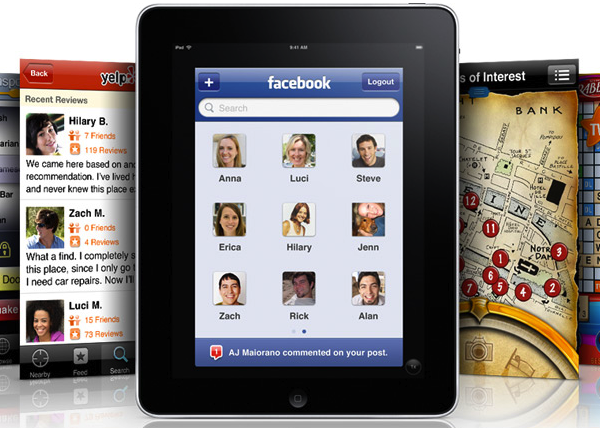
Can you vehemently disagree with a colleague and still respect him? Despite the often passionate claims of our readers and commenters, who may have forgotten the era of Siskel & Ebert, I believe you can.
I'm as much a fan of a vigorous debate as anyone else. In my previous column last Thursday, Enough with the Apple bashing!, I apparently stepped on the baby toe of fellow Betanews contributor, Joe Wilcox. As scathing as his response -- entitled Of course media bias favors Apple -- was, I assure you I've got pretty thick skin.

Enough with the Apple bashing!
As the hype machine for iPad availability revs up into overdrive (and, in some cases, tacks on afterburners), in a desperate effort to restore balance to the universe -- or, in some people's lives, what passes for a universe -- backlash against Apple increases to compensate. I'm thinking it's getting more than a little ridiculous to demonize a company because it's managed to succeed where others have failed.
I'm thinking it's time to stop the silliness.

Facebook jumps the shark
When news broke last week that Facebook users were on the receiving end of a large-scale phishing attack -- the first one to use external e-mail and not just the service's own messaging system -- I started to wonder whether the service had jumped the shark. If this sort of thing continues to escalate, you should start wondering, too.
Hardly a week goes by that Facebook doesn't get hit with another spam, malware, or phishing attack. Last week's screaming headline, that spammers are using conventional e-mail to spread virus-stealing malicious code to Facebook's 400 million users, is the latest chapter of a book that doesn't have an end in sight.
Microsoft cuts and pastes an egg
Ever since she brought me into the world, my mother has taught me many things, namely to not only learn from my own mistakes, but also from the mistakes of others.
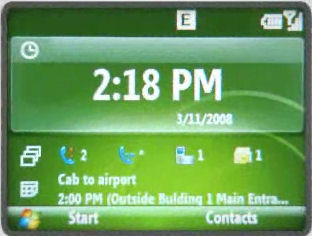
Microsoft clearly never spoke to my mom, as evidenced by its decision to leave cut, copy, and paste capabilities out of the new Windows Phone 7 Series platform, at least in the early rounds. If they had paid Mom a visit, they would have been told -- after being offered some tea, of course -- to fix all the boo-boos of earlier smartphone operating systems before releasing their own updated version. She would have advised them to understand the rough spots encountered by competitive offerings, and do everything in their power to avoid them.

The missing dimension in 3D TV
I risk being tagged a curmudgeon, but I'll say it anyway: 3D television isn't ready for prime time. It isn't ready for your living room, either (or any living room, frankly).
Headlines claiming 3D TV to be the greatest thing since the creation of 2D TV, are sadly more than a little hyperbolic, and I wish the industry would ease back on the PR push to get us to replace our still-new LCD and plasma televisions with 3D versions.

Second thoughts about Google Buzz
So it's been a few weeks since Google Buzz launched, and because I'm a good little geek-soldier who eats his own (figurative) dog food, I've invested lots of time to learn how it works and, more importantly, how it can work for me. Although I'm doing my best to be an optimist, I can't seem to warm up to Buzz. Yes, folks, I think I'm falling out of like with Google's new social media darling service.
Or, to be blunt, Google Buzz sucks.



